Adapt a Detailed Nail-Art Reference to a Smaller Canvas
Keep the character of a detailed nail reference by choosing one visual signature, reducing competing layers, and discussing scale with the salon.
Leer en español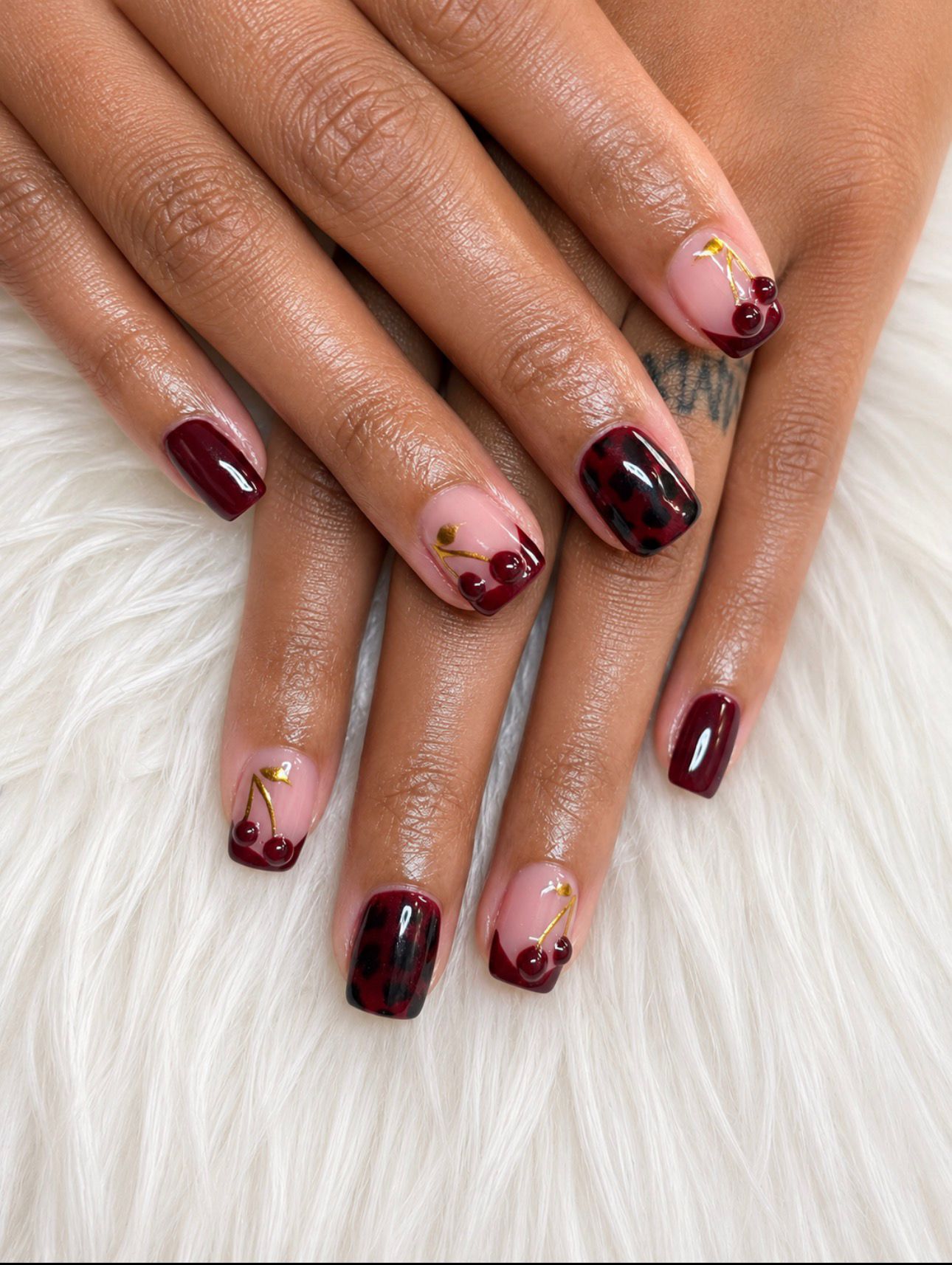
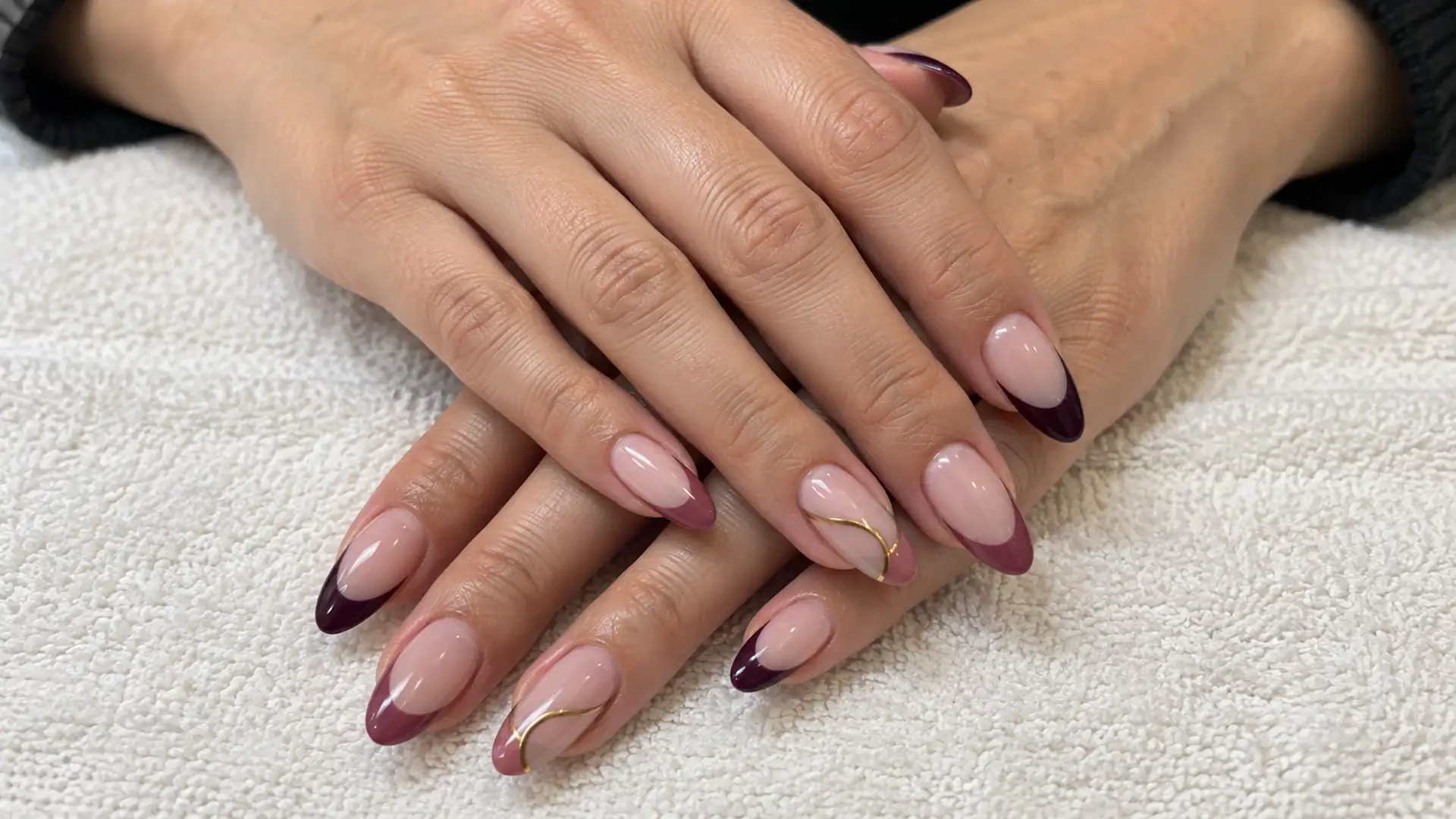
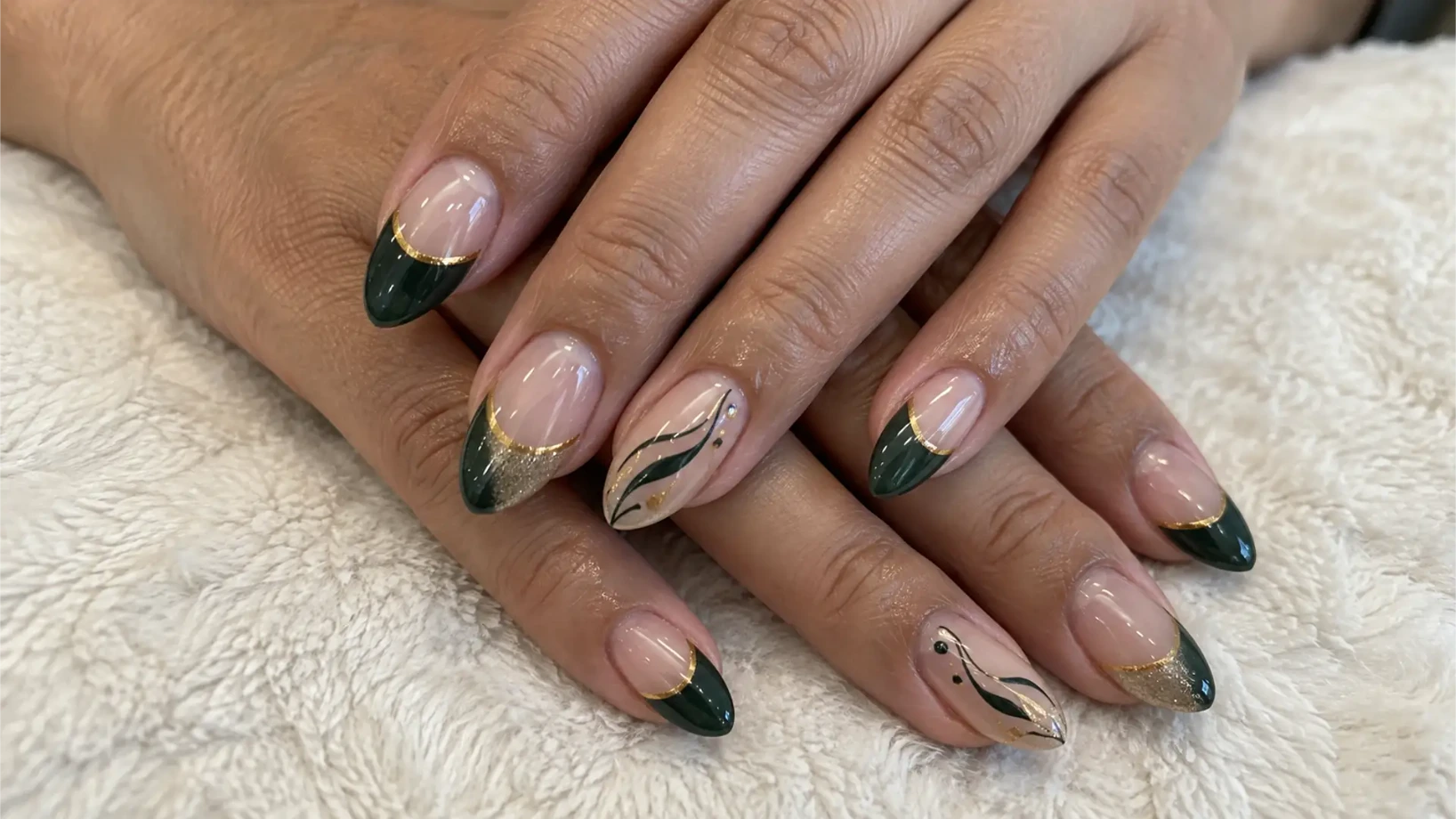
A nail-art reference may look exciting because it contains a lot: a pattern, a tiny motif, a border, and several colors. When the nail you want to decorate offers less space than the reference, shrinking every element can change the idea completely. A more useful approach is to decide what makes the design recognizable, then rebuild around that feature.
Find the visual signature
Cover part of the reference with your finger. Which remaining detail still makes you think, “That is the design I liked”? It might be a pair of cherries, a curved line, or a contrast between dark red and pink. Write that signature in one sentence before deciding what else to keep.
This is a planning exercise, not a judgment about which nail lengths can carry art. The question is how much information you want in the available area. A smaller canvas can have a deliberate, complete design without repeating every mark in the original.
Reduce the number of jobs on one nail
List the reference's layers: background color, main motif, secondary pattern, edging, and extra accents. Choose which layer leads. Then try removing a supporting layer rather than making all of them finer. A clear motif with room around it may express your idea better than several crowded details.
- Keep: the main motif and the color relationship that attracted you.
- Simplify: repeated shapes, the number of colors, or an elaborate border.
- Move: a secondary pattern to another nail if you still want it in the set.
- Omit: details that only become visible when you zoom far into the photo.
Try a cherry-reference example
Imagine a reference with cherries, a dark patterned background, a decorative edge, and a small written word on the same nail. Your signature could be “a cherry motif beside burgundy.” One adaptation would give one accent nail the cherries against a quiet pink area and use burgundy on neighboring nails. The background pattern, border, and word would be left out.
A second option would keep the dark pattern on a separate accent nail and make the cherry motif the only detail on its own nail. Neither option is the correct copy. They are different ways to preserve the reference's character while changing its visual density.
Judge at the size you will actually see
Look at your proposed reference on your phone without enlarging it. Then view your whole hand, rather than one isolated nail. Ask whether the important shape is easy for you to recognize and whether the set feels as detailed as you intended. Use the photograph as a conversation tool; its screen size is not a measurement of your nail.
Tell the technician which detail should remain recognizable and which can change. Ask what scale and placement they recommend for your actual nail area. The final execution, products, and appointment requirements need confirmation with the salon.
Your simplification checklist
- Name the reference's visual signature.
- Choose one leading detail for the accent nail.
- Remove or relocate competing layers.
- Check the design without zooming into the image.
- Keep both the original and your written adaptation to show together.
The YLG home gallery provides salon image references. The adaptations above are editorial ideas for discussion, not promises that a particular design is available. Use the booking page when arranging a visit.
Service source: Check the current YLG service catalog for service information.